
Pre-Production
Have you seen the series Adolescence? It’s an incredible feat of production, each episode (40–60 minutes long) is filmed in a single, uninterrupted take. Kawther, Victoria, and I watched it just weeks before our shoot for The Courier Guy, and the inspiration was still fresh.
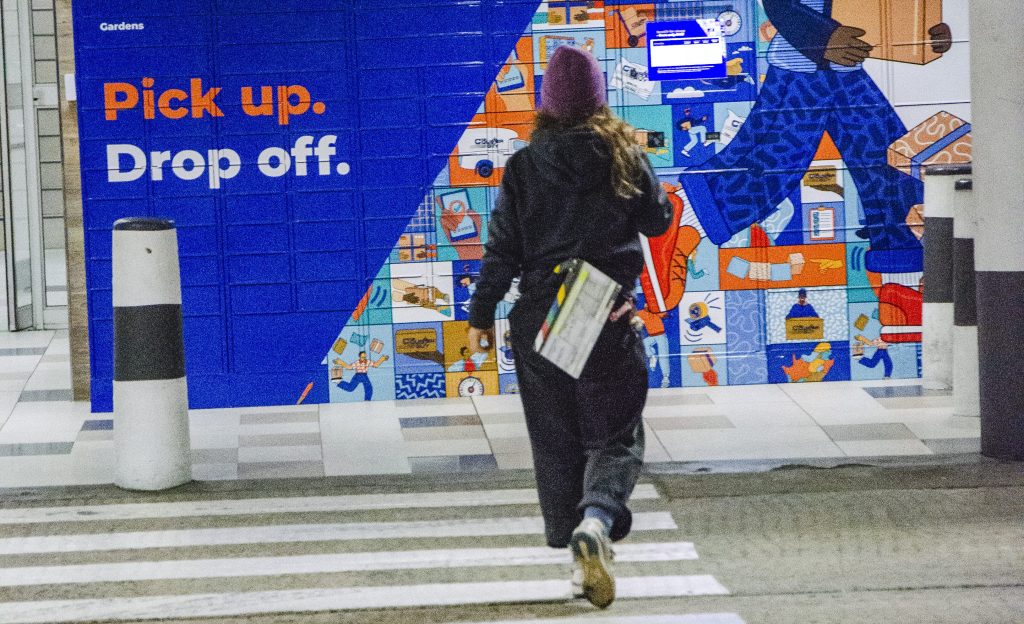
Once we received the script from Simon, we scheduled our recces as usual. This time, we had just two locations to work with: The Courier Guy warehouse and the lockers at the Garden Center in Cape Town. Even with a smaller footprint, we knew that understanding the flow of each space would be essential for pulling off a smooth production.
Kawther and I had been deep in prep for weeks, and the idea of doing a one-take naturally came up during our storyboarding sessions.
The Rig
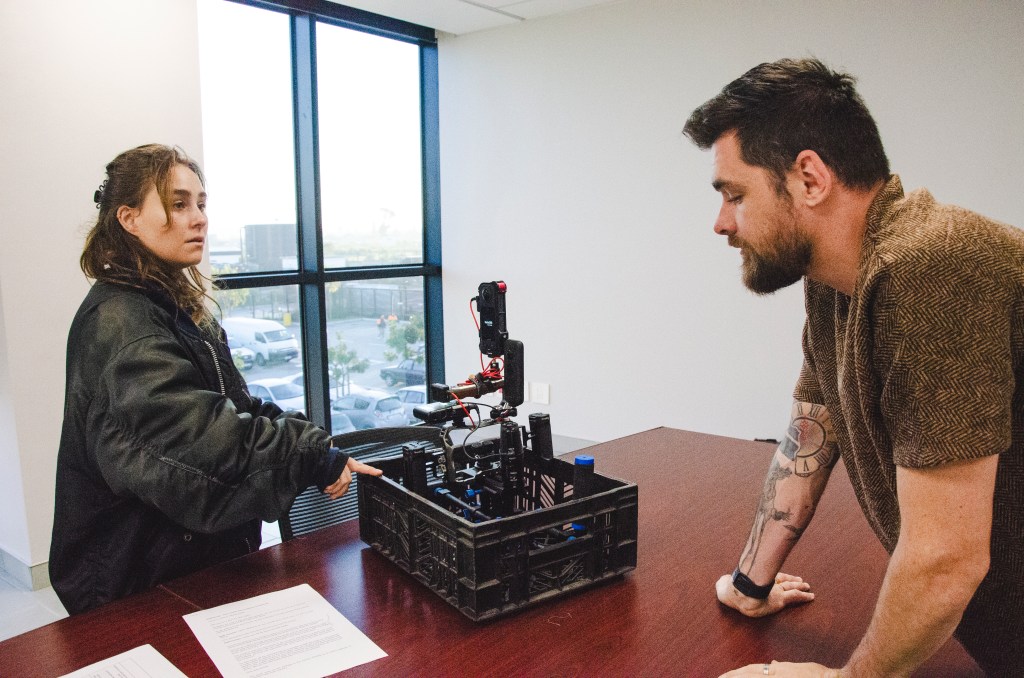
The rig took me about a week to build. At one point, I was even dreaming about it. In our usual Virtual Reality productions, we block actors around a static camera. It’s similar to how stage actors move in relation to a fixed audience, creating flow while maintaining a consistent angle of focus. This approach works well for VR because it encourages viewers to explore the 360-degree environment, without triggering nausea, which is a common issue in earlier headsets caused by lower resolution and refresh rates.
But after reading the script, I knew this wouldn’t be that kind of shoot. This time, we were following a parcel as it moved from one location to another. That meant no static rig, no trusty sandbags to stabilize our setup, and untrained hands carrying our precious gear.
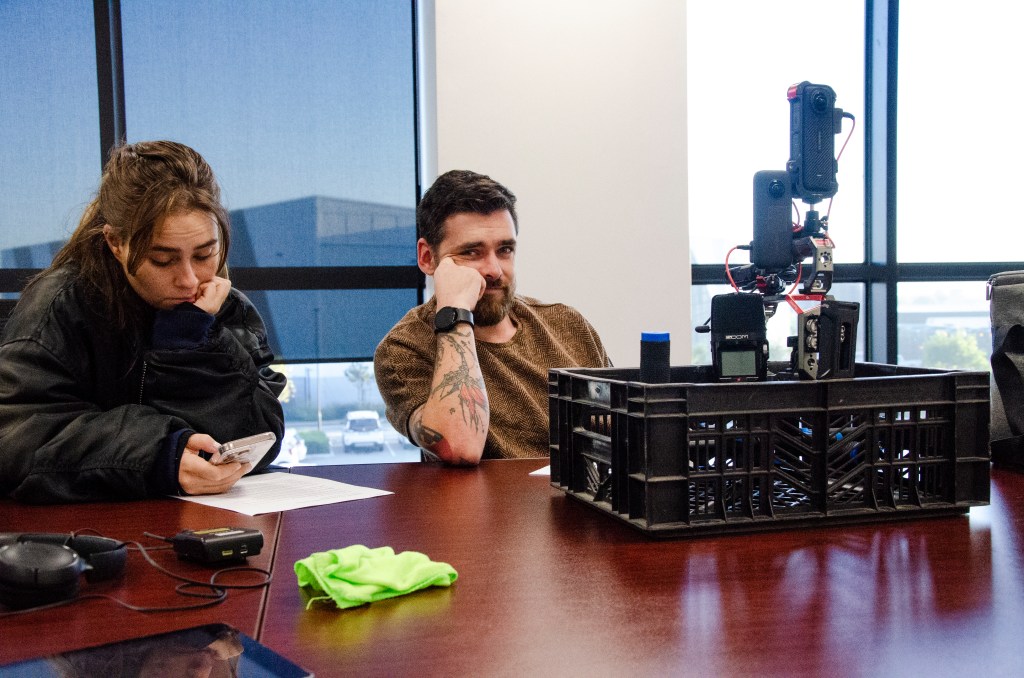
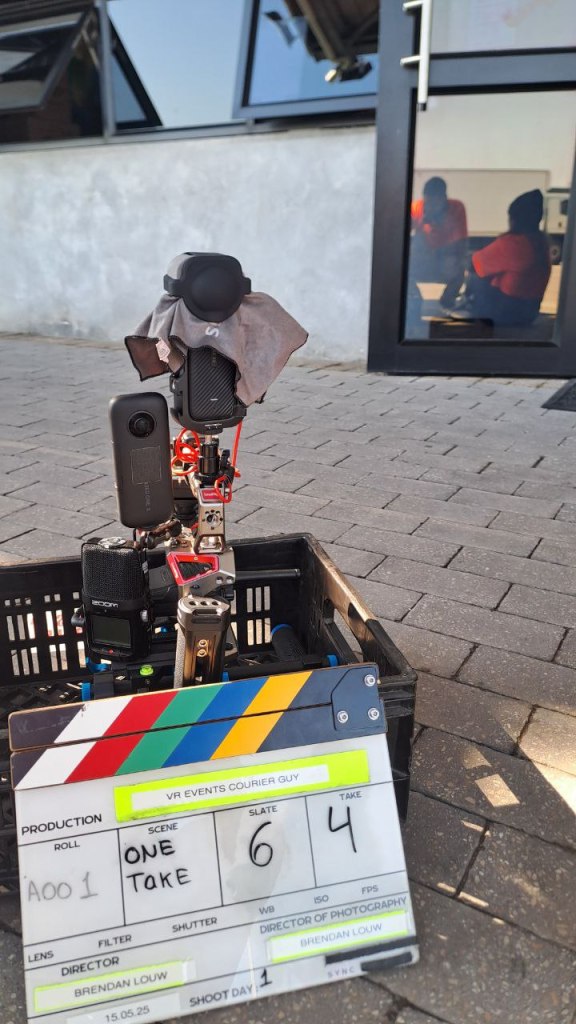
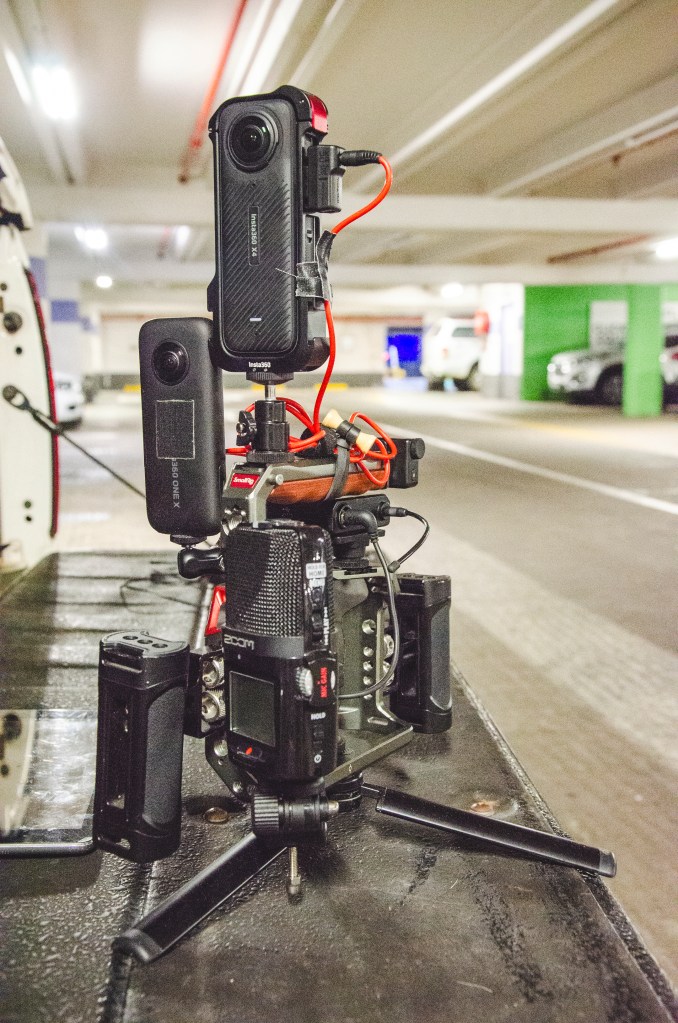
Once I figured out the essentials, the main camera, a second feed for the director (often called the “village” feed), ambisonics mics, and lapel mics… I started building. The first rig was a rough prototype. It was a bit lopsided and honestly gave me a lot of anxiety. It wasn’t safe in untrained hands. So I built a second version with bright blue grips to show where it could be held. Then came version three. We realized the tripod legs could snag on the parcel belt in the warehouse, so we scrapped that and placed the entire rig inside a packing crate. This mimicked the shape and handling of an actual parcel, and it worked beautifully.

The Shoot
Day 1: The Warehouse
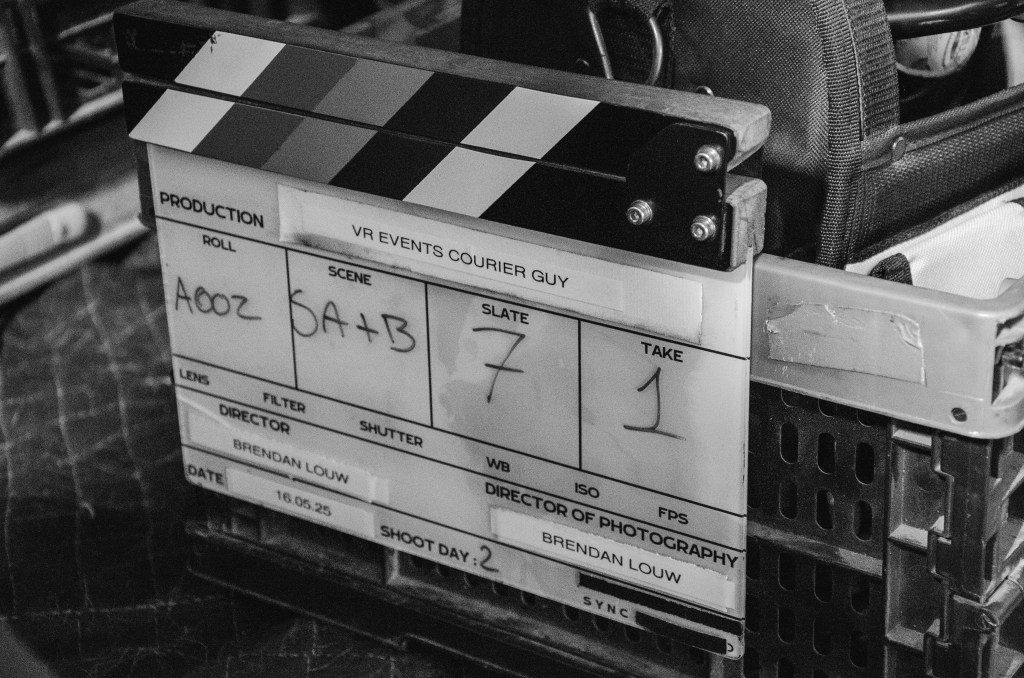
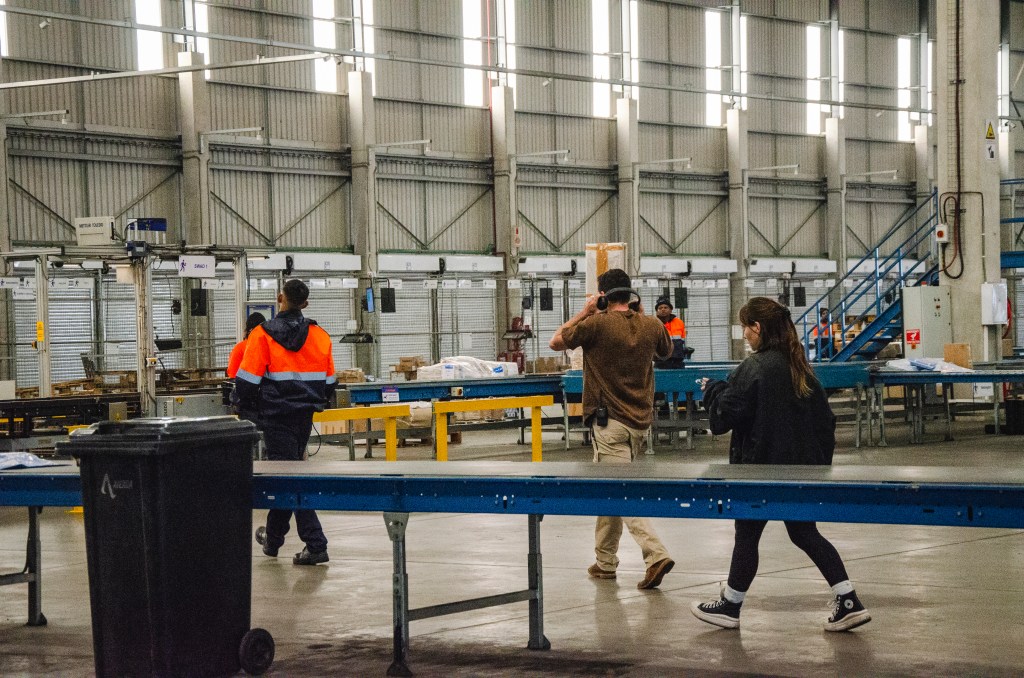
We arrived at 5 a.m., just after the first rush of drivers had left the depot for the day’s deliveries. The floor was quiet, which gave us a chance to walk through the warehouse with the crew. Victoria came up to me not long after and said, “You know, we probably have to do this in one take…” I knew this was coming. And coming from one of my go-to cinematographer, I had to take it seriously.
We gathered all the TCG staff involved for a quick briefing, explained the camera setup, and handed out some TCG clothing to our crew so we could blend into the scene. (Go ahead, try and spot us on camera.)
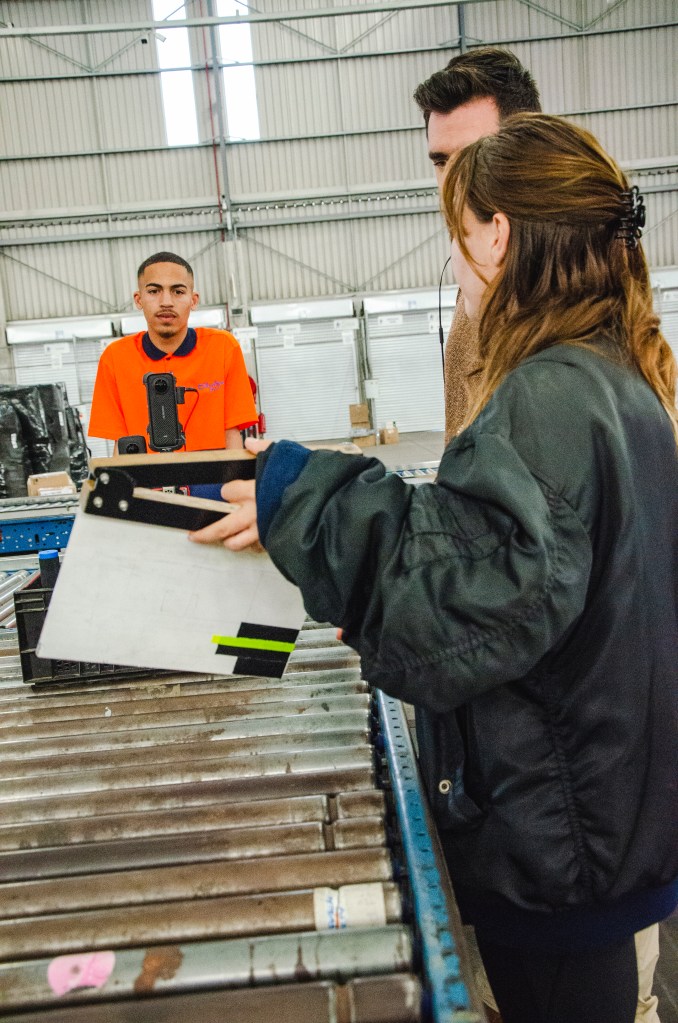
We decided to break the scenes down for practice runs. Since we were working with non-professional actors, it was important to get them comfortable not just around a live camera, but also acting in front of it. We ran several walkthroughs of each section, moving the parcel from one point to the next, guiding the staff on timing, positioning, and flow. Every run helped fine-tune the movement and rhythm of the scene.
For those of you who’ve worked with cameras at events, especially music, you’ll know lasers are no friend to camera sensors. One of our scenes required the camera to pass through a scanner that maps parcel dimensions. For the safety of the rig, we had to turn the lasers off, which created a serious bottleneck during the midday rush. One more variable we had to work around.
After a few runs, the real test was about to begin. I felt a mix of excitement and anxiety rising. The floor had started to fill up. What had been calm earlier now felt like a hive of activity, with what seemed like over 200 staff moving parcels in every direction. It was around noon, and the drivers had returned for a second round of collections. We only had one shot to get this right.
I trusted that our morning training runs would pay off. We got everyone in place.
ACTION.
We followed the rig closely, but not too close, monitoring the director’s feed on the move. Mics were being passed between sections to avoid any cuts. The camera moved from the kiosk onto the belt, every step felt intense. One mistake, and the whole thing was blown. But the parcel kept moving. Through the laser. Down the midsection. Picked up and walked to the bakkie.
Doors closed.
CUT.
We had the shot. Everyone was excited. I couldn’t believe it. The hardest part of the shoot was behind us… or so I thought.
Day 2: The Locker
Another early morning on set. We arrived and started setting up. Our driver was waiting outside, the same driver and same vehicle we had placed the “parcel” in the day before.
The first challenge of the day came quickly. The vehicle couldn’t fit into the underground parking due to height restriction. What should have been a simple shot, taking the parcel from the vehicle to the locker, now turned into another long take, walking the parcel all the way from outside.
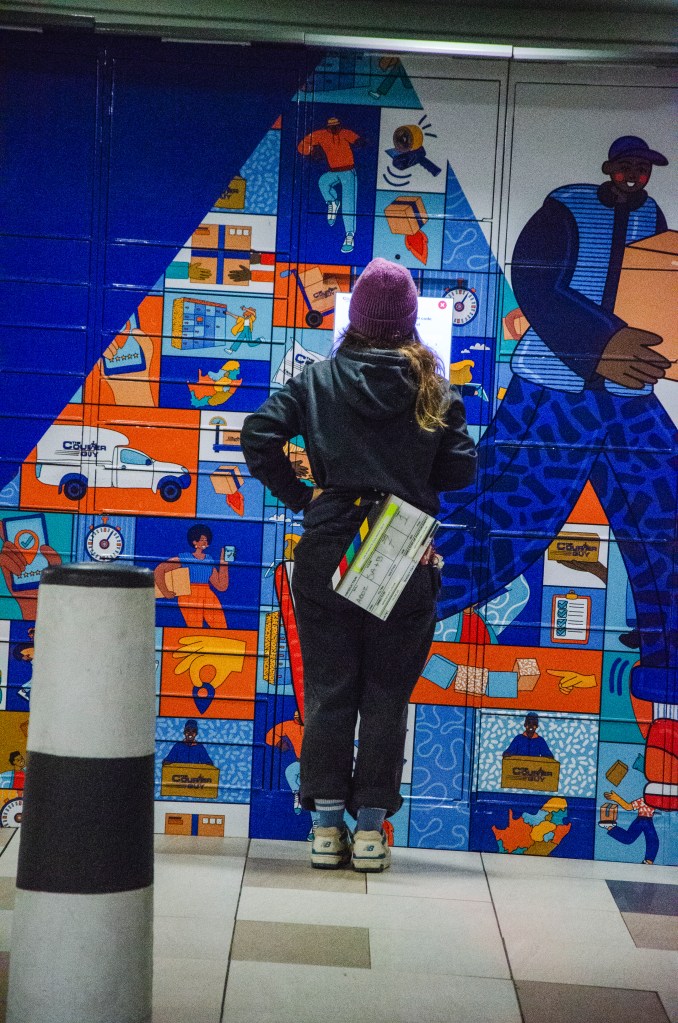
The second challenge was opening the locker. We couldn’t get a new access code for every take, so we needed a developer to remotely unlock the door. This was another moment that had to be timed perfectly. Good thing we had walkie-talkies on set, they really came in handy here as communication was key.
Our communication and timing were critical. As the courier approached the kiosk, Simon asked the developer over the phone to open the locker. Kawther and I followed behind the courier’s line of sight, with her focused on the feed while I spotted her steps, making sure she didn’t bump into anything as we moved. I kept one eye on the frame and the other on the scene, quietly directing as we stayed hidden behind his back and the parked cars.
The final scene, where the actor arrived to collect the parcel, was smooth and simple. No chaos, no tension, just a clean close to a shoot that had tested every part of our prep, our creativity, and our nerves.
And just like that, the parcel reached its destination… So did we.
The Crew
Director: Brendan Louw
Producer: Brendan Louw
Director of Photography: Brendan Louw
Camera Operator: Kawther Barraho Louw
Assistant Director & Production Coordinator: Kawther Barraho Louw
Cinematography Advisor & Set Coordinator: Victoria Carvalho Carneiro Leão
Scriptwriter: Simon Hill
Editor: Brendan Louw
Assistant Editor: Kawther Barraho Louw
TCG Branch Manager & On-Site Liaison: Mikael Pelander
Behind The Scenes Gallery








Leave a Reply